
The short answer
GTM, or go-to-market, is the operating plan for bringing an offer to the right market and turning demand into revenue. A technical GTM plan goes one level deeper: it defines how a real lead moves through tools, fields, owners, alerts, and reporting without losing context along the way.
Most definitions of GTM are correct but incomplete. They say a GTM strategy identifies the customer, the problem, the position, the channel, and the sales motion. HubSpot’s guide, for example, frames GTM as the step-by-step plan for bringing a product to market and aligning stakeholders around audience, positioning, marketing, and sales. That is the strategic layer.
The operational layer is where the plan either holds or falls apart. A campaign launches, a list gets sourced, an enrichment table fills, a sequence sends, someone replies, the CRM updates, Slack fires, and a weekly report tries to explain what happened. If the plan cannot describe that path, it is not yet a working GTM system. It is a launch document waiting for manual cleanup.
GTM is not just launch strategy
A launch plan answers, “How will we introduce this offer?” A technical GTM system answers, “What happens every day after the offer meets the market?” That distinction matters because modern GTM work is no longer contained in a single team or a single tool. Salesforce research found sales teams use an average of 10 tools to close deals, and reps spend only 28% of the week actually selling. The hidden tax is the work between tools.
This is why a useful GTM plan should be judged by traceability. If you pick one lead, can you see where it came from, why it was accepted, which fields were added, what was sent, who owns the next action, and whether the report reflects the same truth? If not, the strategy may be right, but the route is not built.
The six layers of technical GTM
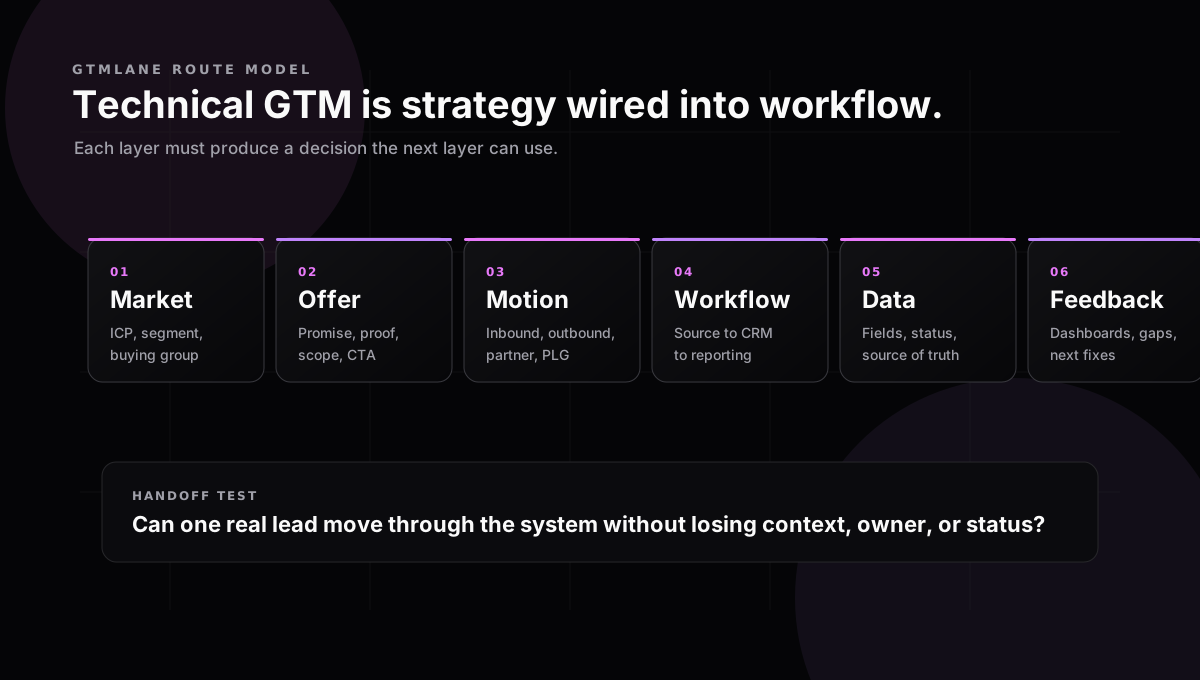
Think of GTM as six layers. The first three are strategic: market, offer, and motion. The second three are operational: workflow, data, and feedback. Weak GTM usually skips the bottom half.
Market
Who has the painful problem, and which accounts are worth entering the route?
Output: ICP, segments, disqualifiers, buying committee
Offer
What specific promise is being taken to market, and where are its boundaries?
Output: Positioning, proof, packaging, scope, CTA
Motion
How does demand get created and converted without confusing the buyer or the team?
Output: Inbound, outbound, partner, PLG, sales-assist, channel rules
Workflow
What happens to a real lead after it appears?
Output: Source intake, enrichment, outbound, CRM, alerts, reporting
Data
Which fields must survive every handoff, and which tool is allowed to be true?
Output: Field contract, system-of-record rules, lifecycle definitions
Feedback
How does the team learn what worked without rebuilding the report by hand?
Output: Dashboards, source quality, reply outcomes, exceptions, next fixes
The technical questions every GTM plan should answer
You do not need a complicated system to be technical. You need explicit answers to the questions that decide whether a lead can move. A lean outbound team running Apollo, Clay, Smartlead, a CRM, Slack, and a spreadsheet still needs the same operating rules as a larger revenue team. The difference is scale, not physics.
- Where does the lead enter the system, and what gets rejected before enrichment?
- Which fields are required before a lead can move to outbound?
- Which tool owns each field after enrichment, outreach, and CRM sync?
- Which events change status: sent, bounced, replied, booked, disqualified, recycled?
- Who owns the next action when a positive reply, bounce, or sync failure happens?
- Which alerts are urgent enough to interrupt the team, and which belong in the report?
- Which dashboard can answer source quality, follow-up, and revenue questions without exports?
If those answers are missing, the team will invent them at the moment of pressure. That is how “temporary” exports become the reporting process, how reply handling becomes a tab someone checks when they remember, and how CRM data becomes a debate.
Technical GTM starts with the route
The route is the path from lead source to revenue reporting. For many B2B teams, the route is simple enough to name: source → enrichment → outbound → CRM → alerts → reporting. The work is not naming the boxes. The work is defining what must survive each handoff: context, owner, and status.
Context means the record still carries why it exists: source, ICP fit, segment, campaign, relevant fields, and evidence. Owner means a person or role is responsible for the next action. Status means every system agrees on what happened: accepted, enriched, sent, bounced, replied, booked, disqualified, or recycled.
This is also the bridge between GTM strategy and GTM engineering. GTM engineering is the discipline of building that route. But every team needs the underlying route decisions even if it does not need a full-time engineer.
What good looks like
A good GTM system is boring in the best way. A lead enters with a source label and ICP reason. Enrichment adds fields with fallbacks. Outbound sends only when required fields are present. Replies route to the CRM and the owner. Alerts fire for exceptions, not every activity. Reporting reads from defined fields instead of a collage of exports.
That is not a broad agency promise or a new product category. It is the cleanup work that makes an existing GTM motion visible. If you want to find your own breaks, start with the one-afternoon GTM workflow audit and trace one real lead through the system.
Sources
- HubSpot — What is a go-to-market strategy?
- Salesforce — sales productivity research and State of Sales
- ZoomInfo — GTM tech stack essentials
- Clay — GTM engineering: what it is and how to hire
Get the next field note
One practical, sourced note on GTM handoffs and GTM engineering when it's published.
No list-blasting. A short, useful sequence — unsubscribe any time.