

The short answer
Broken GTM handoffs cost outbound teams in three ways: rep time (reps spend under 30% of their week selling), data quality (B2B contact data decays 22–70% a year), and lost replies (average cold-email reply rates sit at 3–5%, so every mis-routed reply is expensive). The numbers below are drawn from published research, with sources linked at the end.
“Our workflow is a bit messy” sounds like a cosmetic problem. The research says otherwise: the cost of leads losing context, owners, and status between tools shows up in rep hours, deliverability, reply handling, and revenue. Here are the numbers that quantify it — and where on the route each one bites.
Rep time: most of the week isn’t selling
Salesforce’s sales productivity research is the most-cited number in this space, and it hasn’t meaningfully improved in years: sales reps spend less than 30% of their week actually selling. The rest goes to administration, internal meetings, and — most relevant here — manually moving and re-entering data that tools were supposed to hand to each other.
<30%
of a rep's week is spent on actual selling activities.
Salesforce research
~1/5
of rep time goes to manual data entry alone, per State of Sales analyses.
Salesforce State of Sales
Manual data entry is exactly what a broken handoff creates: when the sequencer doesn’t write reply state to the CRM, a human does. When enrichment doesn’t map to CRM fields, a human re-keys it. The “messy workflow” is paid for in selling hours.
Data quality: the route decays while you run it
Even a perfectly wired workflow degrades, because the data inside it does. Apollo’s analysis puts B2B email decay at roughly 3.6% per month — which compounds past 35% a year — and broader studies put total B2B contact-data decay anywhere from 22% to 70% annually depending on industry and field type. People change jobs (average tenure in many B2B segments is under three years), companies merge, domains move.
3.6%/mo
of B2B email data goes stale — 35%+ compounded annually.
Apollo
22–70%
annual contact-data decay across industries and fields.
Landbase
$12.9M
average annual cost of poor data quality per organization, per Gartner estimates.
Gartner, via Coffee.ai
The handoff angle: decay is survivable when intake rules, enrichment fallbacks, and dedupe logic catch it. Without those rules, stale records flow straight into sequences — and bounces from stale emails damage the deliverability of everything else you send.
Replies: the scarcest asset in outbound
Benchmark data across millions of sends is consistent: average cold-email reply rates sit in the low single digits — roughly 3–5% — while disciplined top performers reach 15% and above. That math is the strongest argument for clean reply routing there is: if only one in twenty or thirty prospects ever replies, a positive reply that sits unnoticed in a campaign inbox for three days is the most expensive failure in the whole stack.
3–5%
average cold-email reply rate across large 2025–2026 benchmark datasets.
Instantly benchmark report
15%+
reply rates reached by top-quartile senders with tight ICPs and follow-up.
The Digital Bloom
Tool sprawl: more seams, not more speed
The modern GTM stack multiplies handoffs. ZoomInfo reports the average rep touches around 10 tools to close a single deal, and stack surveys put typical B2B sales teams at 8–12 tools — while the best-performing teams run closer to six. Every added tool adds at least one seam where context, ownership, or status can fall on the floor.
~10
tools touched by the average rep to close one deal.
ZoomInfo
8–12
tools in a typical B2B sales stack; top teams consolidate to ~6.
SyncGTM
~27%
of rep hours lost to chasing and correcting bad data, per industry analyses.
Salesmotion
What the numbers mean
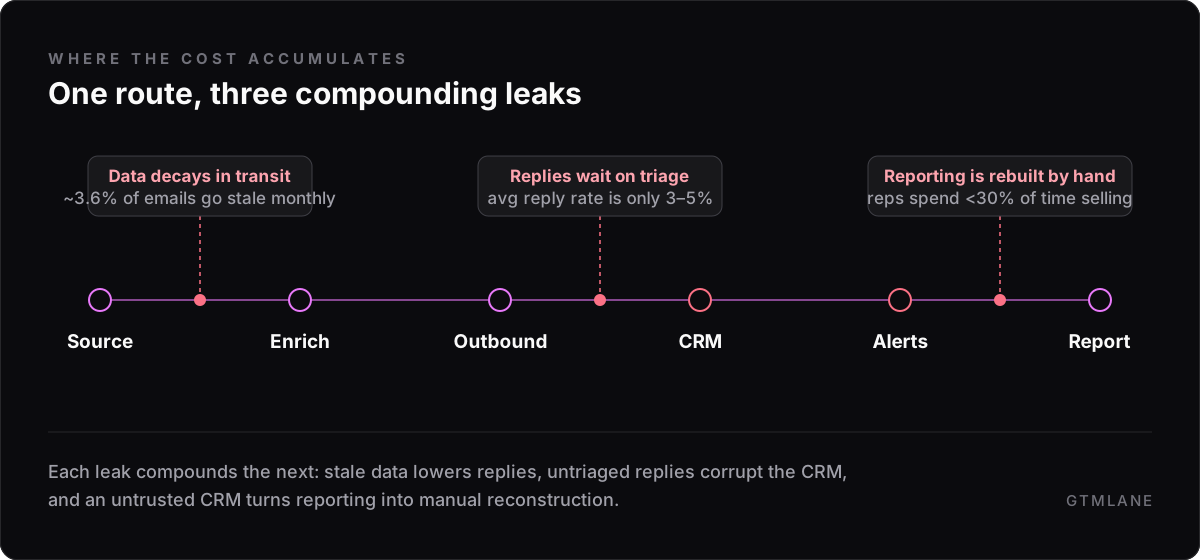
Read together, the statistics describe one mechanism, not four separate problems. Data decays at the front of the route; weak intake lets it through; sprawl multiplies the handoffs it has to survive; and the scarce replies that outbound does earn get triaged by hand because reply state never reaches the CRM. Each leak compounds the next — which is why teams feel the cost as “reporting is always wrong” when the cause is three handoffs upstream.
It’s also why the fix isn’t another tool. The leaks live between the tools — in missing intake rules, field contracts, reply routing, and reporting definitions. That layer is exactly what a workflow cleanup sprint writes down and repairs, and what our six-handoffs field note breaks down seam by seam.
Find your own numbers
Benchmarks tell you the industry’s cost. Your scorecard tells you yours. The Handoff Health Check grades all six handoffs in about two minutes, and an example audit shows what the full route map looks like.
Sources
- Salesforce — sales productivity research & State of Sales
- Salesforce — sales statistics roundup
- Apollo — the average rate of B2B data decay
- Landbase — data decay in B2B CRMs
- ZoomInfo — the GTM tech stack
- SyncGTM — how many tools B2B sales professionals use
- Instantly — Cold Email Benchmark Report 2026
- The Digital Bloom — cold outbound reply-rate benchmarks
- Coffee.ai — the hidden costs of bad CRM data (citing Gartner)
- Salesmotion — B2B data decay analysis
Statistics reflect the cited studies’ methodologies and publication windows; ranges are shown where reputable sources disagree.
Get the next field note
One practical, sourced note on GTM handoffs when it's published. No volume, no fluff.
No list-blasting. A short, useful sequence — unsubscribe any time.